Deportee selection policy
The Most Precious of CargoesThe Deportee selection policy is the procedure imposed on deportees after they reached their destination: qualified doctors examined the arrivals and retained only a small minority, while the rest were rejected and killed. Presented through the language of inspection, percentages, and delivery, the process turns people into sortable cargo and makes selection the gateway to systematic murder.
Background and Arrival
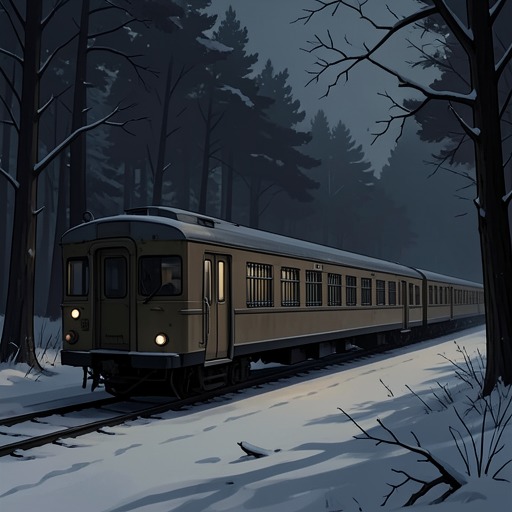
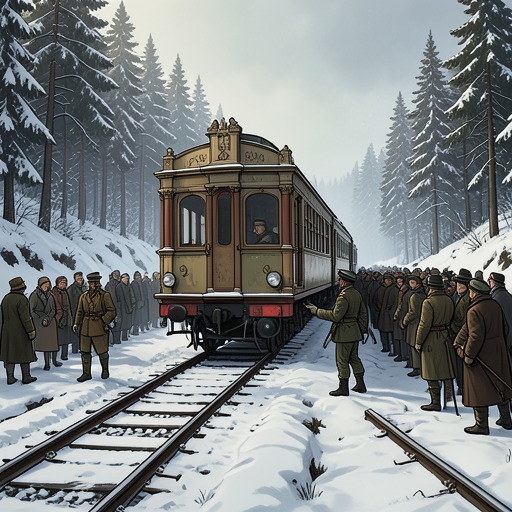
Convoy 49 left Bobigny-Gare near Drancy on March 2, 1943, and arrived on the morning of March 6 at its final destination in Poland. The account describes the train’s passengers as a cargo that included people from many circumstances and family relationships: former tailors and their relatives, customers and suppliers, religious ministers, and personal doctors accompanying invalids, elderly people, the sick, and others unable to care for themselves. The train returned empty almost immediately, while the Poor Woodcutter’s Wife, occupied with her new responsibilities as a mother, did not see it pass.
That juxtaposition places the selection process within two sharply different frames. In the forest, a child has been received into a mother’s care; at the train’s destination, arriving people are treated as a delivery to be assessed. The account’s bureaucratic terms do not soften the violence. They expose how a system can describe human beings as cargo before sorting them for survival or death.
Examination and Rejection
After the cargo was received, qualified doctors conducted the examination. They retained only 10 percent: the narration renders the proportion as one hundred people out of a thousand. The medical authority of the selectors gives the procedure an outward form of expertise, but the result is a brutal division of the arrivals rather than care for them.
The people rejected included the elderly, men, women, children, and the infirm. The account says that after treatment late in the afternoon they vanished into the desolate Polish sky. That euphemistic disappearance follows the numerical precision of the selection itself: the text first counts those retained, then renders the fate of the far larger rejected group in language that exposes the gap between administrative description and mass death.
Consequences and Erasure
The selection’s consequences extend beyond the division of arrivals. Later, as the trains ceased running, the Death’s Heads forced surviving prisoners to dig trenches in the snow and burn the corpses piled around the crematoria. They were also made to destroy the crematoria, in an effort to eliminate both witnesses and traces of the crime. The destruction was incomplete in the scene’s material details: unshipped hair remained packed beside mountains of spectacles and heaps of men’s, women’s, and children’s clothes, all of which were also supposed to disappear.
This aftermath makes the selection policy legible as part of a larger machinery of killing and concealment. The initial decision about who would be retained did not stand apart from the disposal of those rejected; the ordered classification of people was followed by forced labor to erase bodies and evidence. The contrast between the policy’s clinical examination and the snowbound trenches reveals the violence beneath its procedural surface.